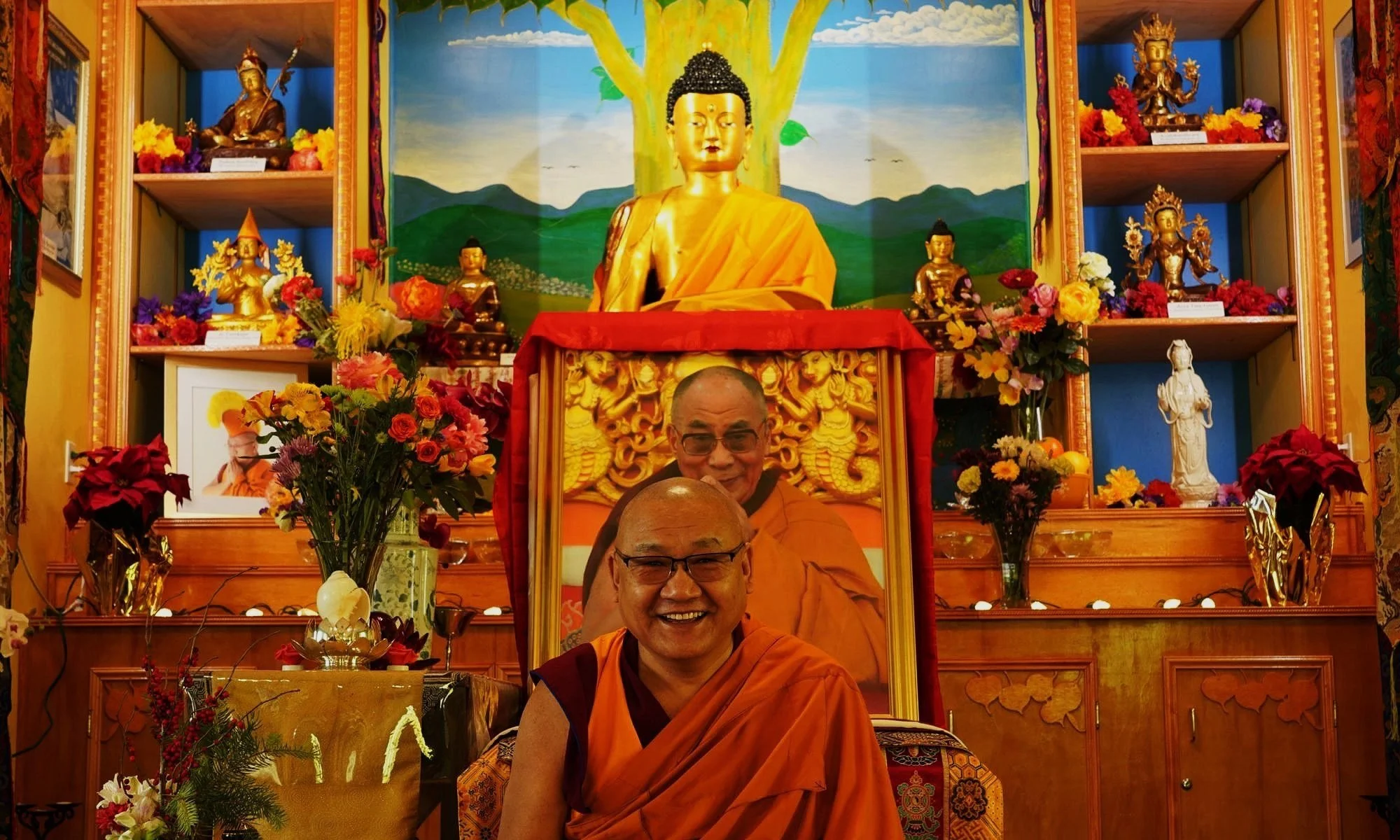
“An act of generosity does not require anything other than compassion.”
— Venerable Geshe Thupten Phelgye
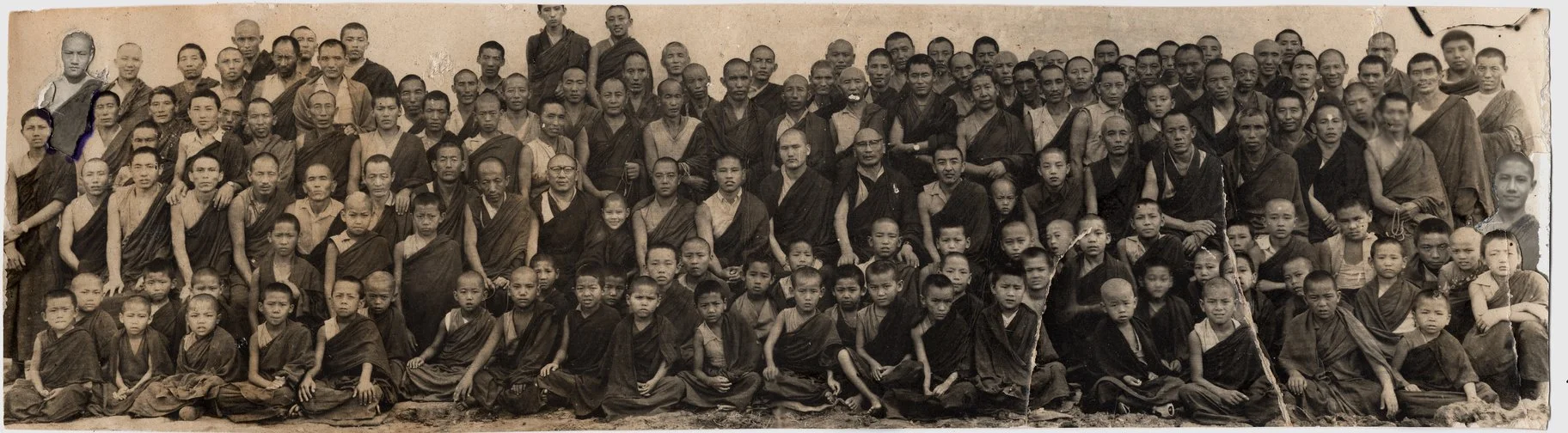
Sera Jey Monastary, 1974/75
Early Life
Geshe Phelgye was born to Tsewang Darjee Ra-tsang and Tashi Tsomo Gyari-tsang in April 1956, in a small nomadic village in Rivoche County, Kham Province, Tibet. Following the Communist Chinese invasion of Tibet in 1959, Tsewang and Tashi decided to take their 3 children and flee after hearing His Holiness the 14th Dalai Lama had escaped to India. They prepared their 11 healthiest yaks and strongest 3 horses to help carry their belongings, and began the 500 mile trek to the Indian border.
On their way south to Nyingthi, Tsewang and Tashi were stopped and searched by Chinese military in the town of Tamo. Finding no contraband, they were permitted to continue south. Now several weeks into their journey on foot, and not yet having arrived in Nyingchi, the family was stopped yet again by the Chinese military— but this time they were not so fortunate. After detaining the family of five, the military decided to send Tsewang, Tashi and their children (aged 7, 3, and <1) to a forced labor camp.
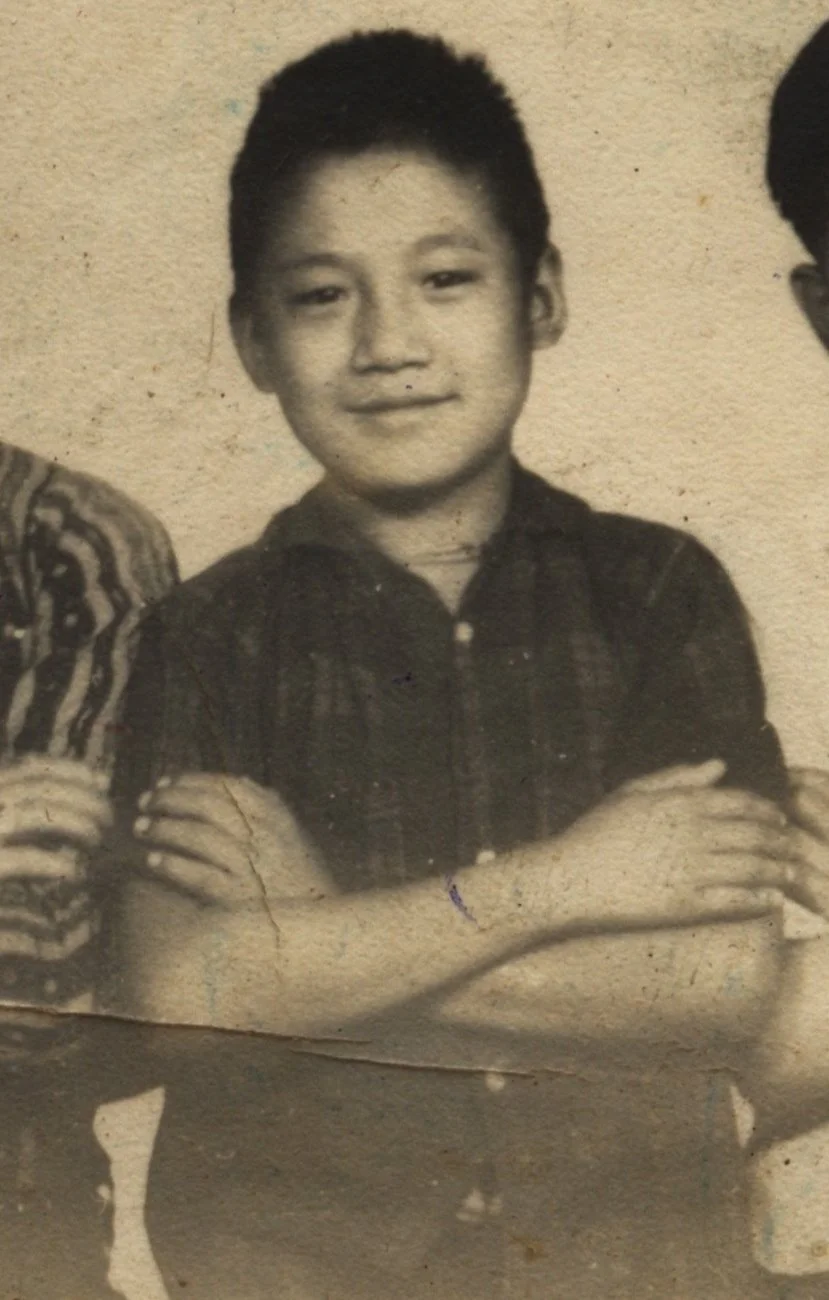
Geshe-la, age 15
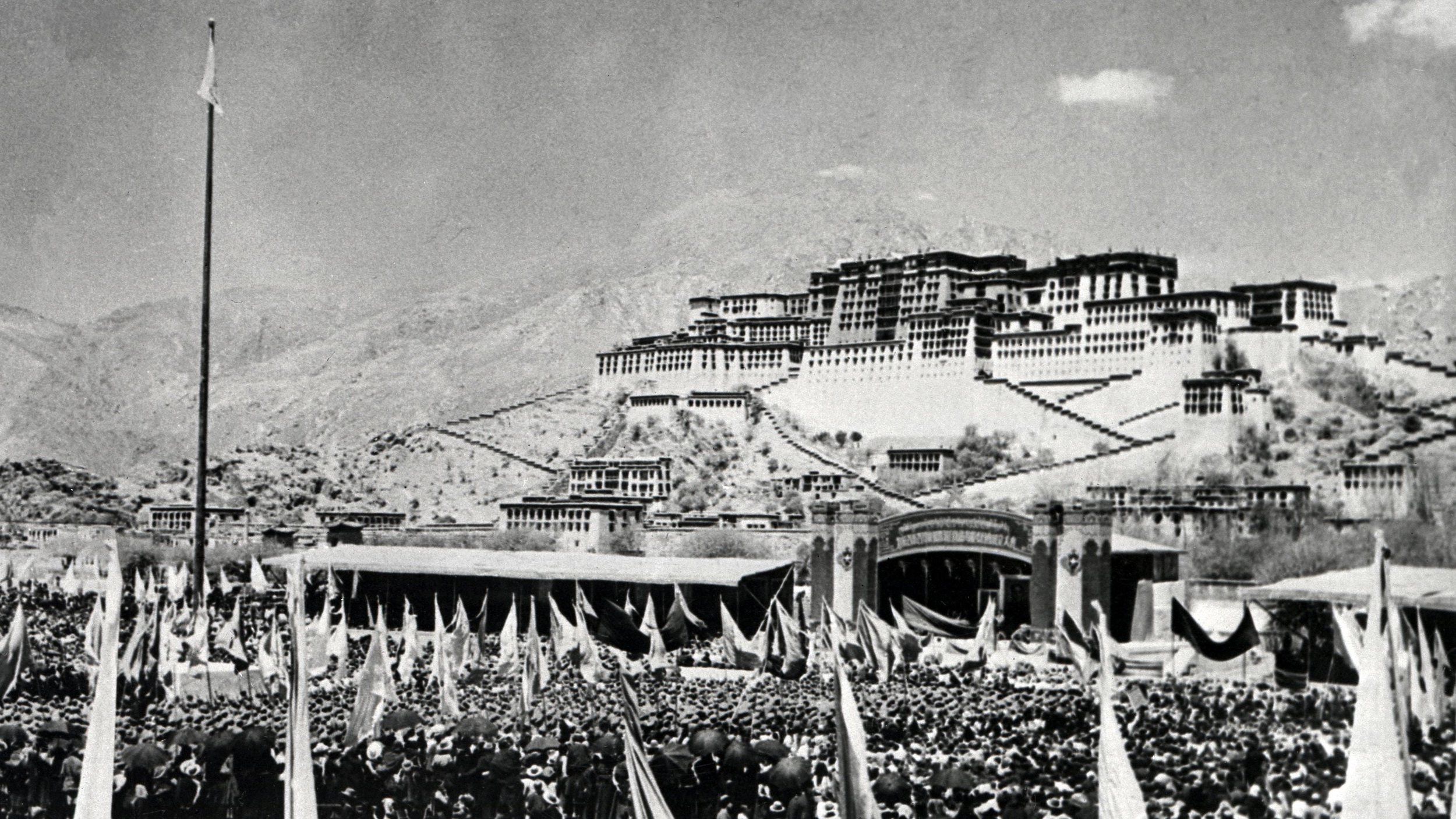
The March 1959 uprising in Lhasa was triggered by fears of a plot to kidnap the Dalai Lama and take him to Beijing. When Chinese military officers invited His Holiness to visit the PLA headquarters for a theatrical performance and official tea, he was told he must come alone, and that no Tibetan military bodyguards or personnel would be allowed past the edges of the military camp. On March 10, 300,000 loyal Tibetans surrounded Norbulinka Palace, preventing the Dalai Lama from accepting the PLA’s invitation. [Reference]
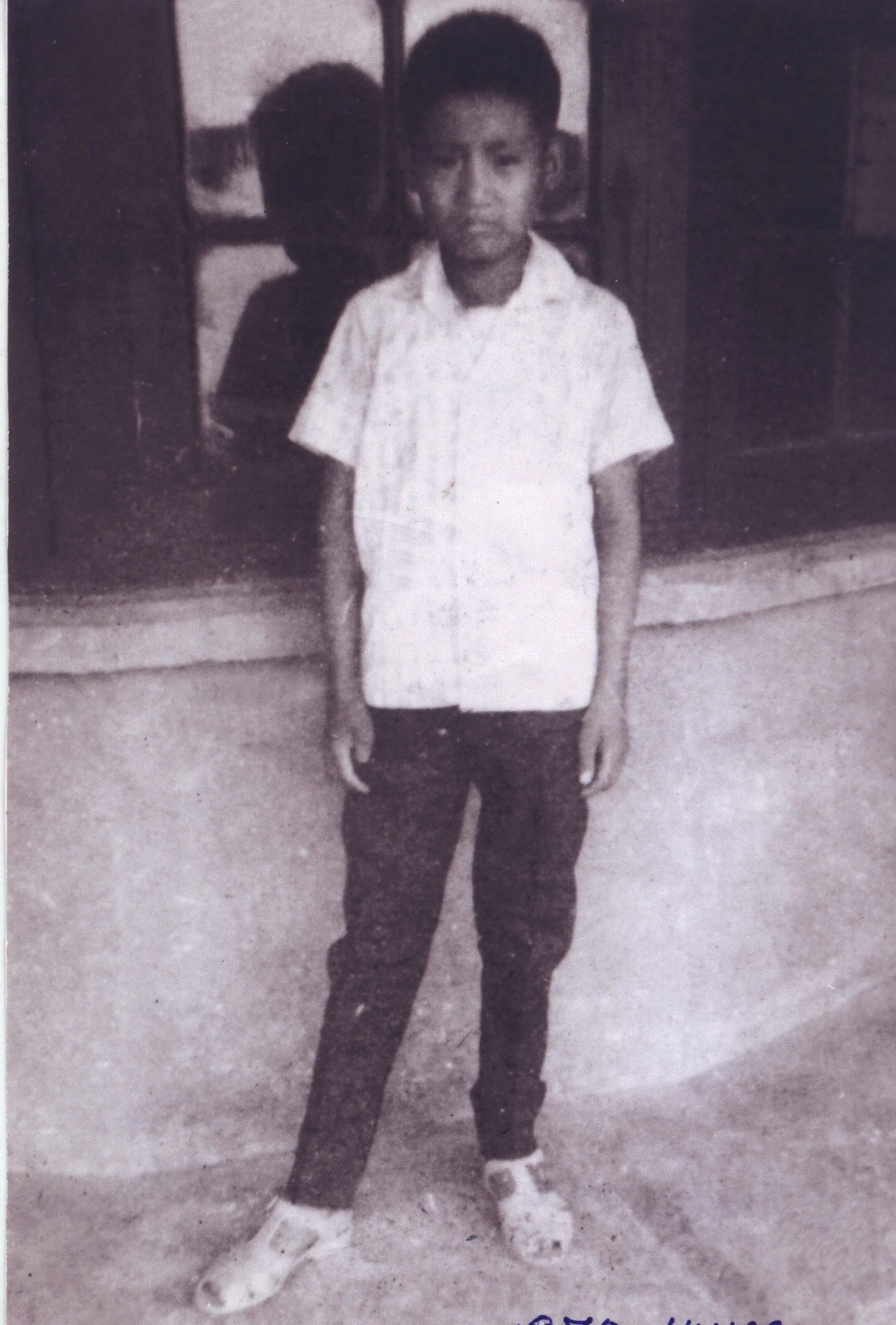
Geshe-la’s first photo, age 14
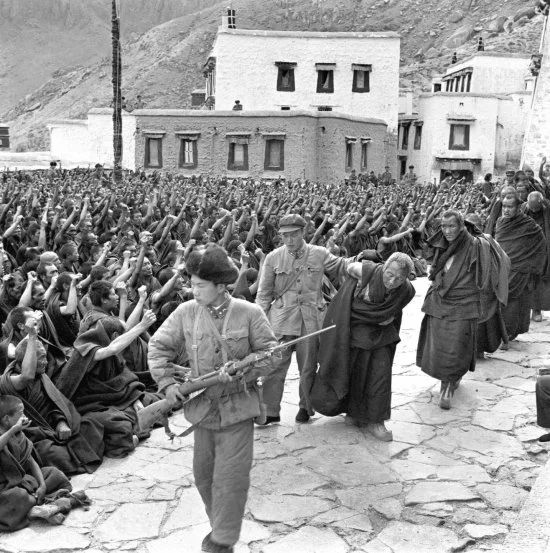
They spent the next 2 years and 9 months in the camp, where Tsewang, Tashi, and their 7 year old daughter would preform the back-breaking work of pulverizing stones into gravel by hand. Tashi would carry her infant to work each day inside her chupa pouch; and if there was no elder who could watch Geshe-la that day, Tashi would keep her son safe from harm by tying him on a lead to a bush or tree. Knowing this was no life for her family, escape was never far from Tashi’s mind: she formulated a plan.
Now nearly 3 years after they had first been captured, they requested the camp wardens permit their family to go on a short religious pilgrimage. Tashi and Tsewang convinced the guards to let their family leave the camp. On the 30th of the ninth Tibetan month the family walked out of the camp under the false pretenses of a pilgrimage; praying that because the first day of the Tibetan tenth month is celebrated as New Years, there would be few people out to look for them when they did not return the next day.
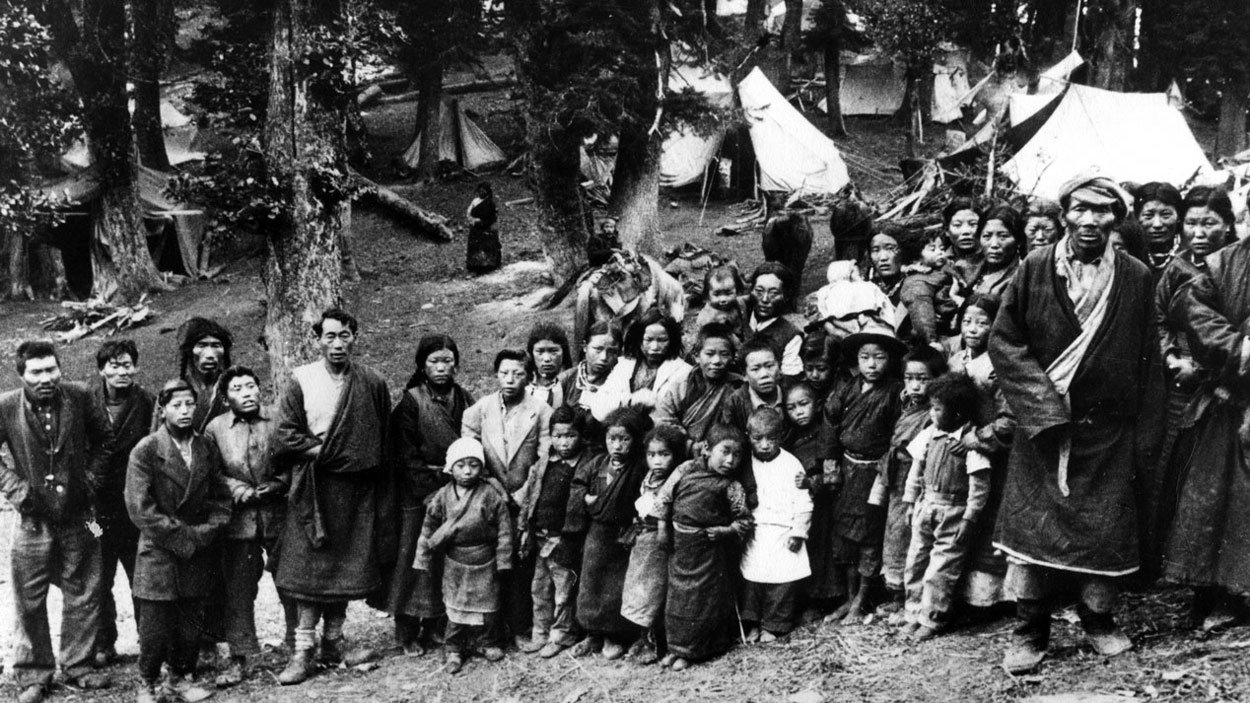
After 24-days-journey on foot through the Himalayas, Tsewang, Tashi, and their three children (aged 9, 5, and 2) finally arrived to safety; crossing the border into India in November of 1961. It was here Geshe-la would learn to call his new home and live, for the first time, outside of the confines of Chinese occupation.
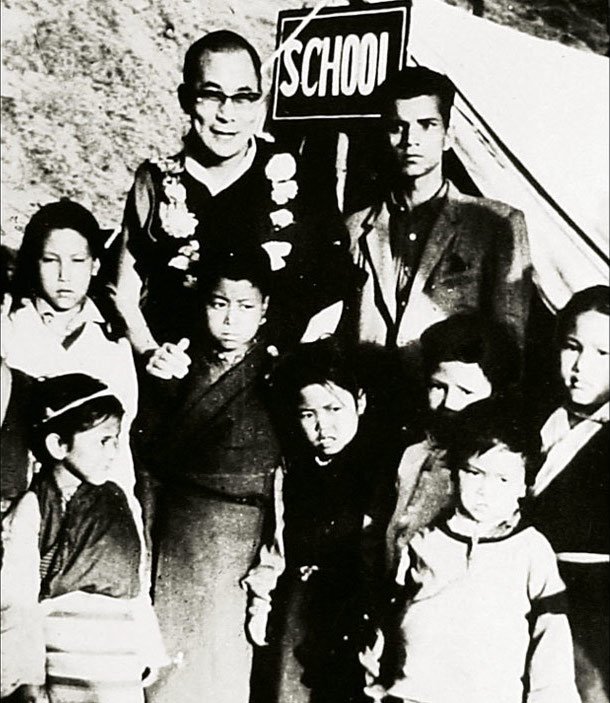
His Holiness the 14th Dalai Lama with pupils and their teacher outside a tent school for road worker’s children, Dharamsala, 1960’s
Education in Exile
Geshe-la and his family settled into the Tibetan Refugee camp in Changlang, India, where the Indian government set up Tibetan Refugee schools. Geshe-la had his elementary schooling at C.S.T. Changlang.
At age 11 he began working as a servant for the school headmaster doing cleaning, household chores, and childcare. He would wake up early every morning before school and walk in the dark to the headmaster’s house to complete his daily tasks. After school, he would stay late serving the headmaster and his family. He earned 6 rupees a month (which is equivalent to earning $7.55 a month today, in America). He continued to work for his headmaster and earning money which greatly helped their family to survive, until he was 13 years old.
In 1973 after Geshe-la graduated from S.F.F. Higher Secondary School in Dehradun he decided to enroll in Sera Jey Monastic University. He received the novice ordination from the senior tutor to His Holiness the 14th Dalai Lama, Kyabje Ling Rinpoche, in 1974. Three years later he received the Bichu ordination from H.H. the Dalai Lama in 1977. He was appointed the headteacher of the monastic school in 1979 at age 23, where he brought the school into a new era.
Tibetan Refugee Camp, North India 1960’s
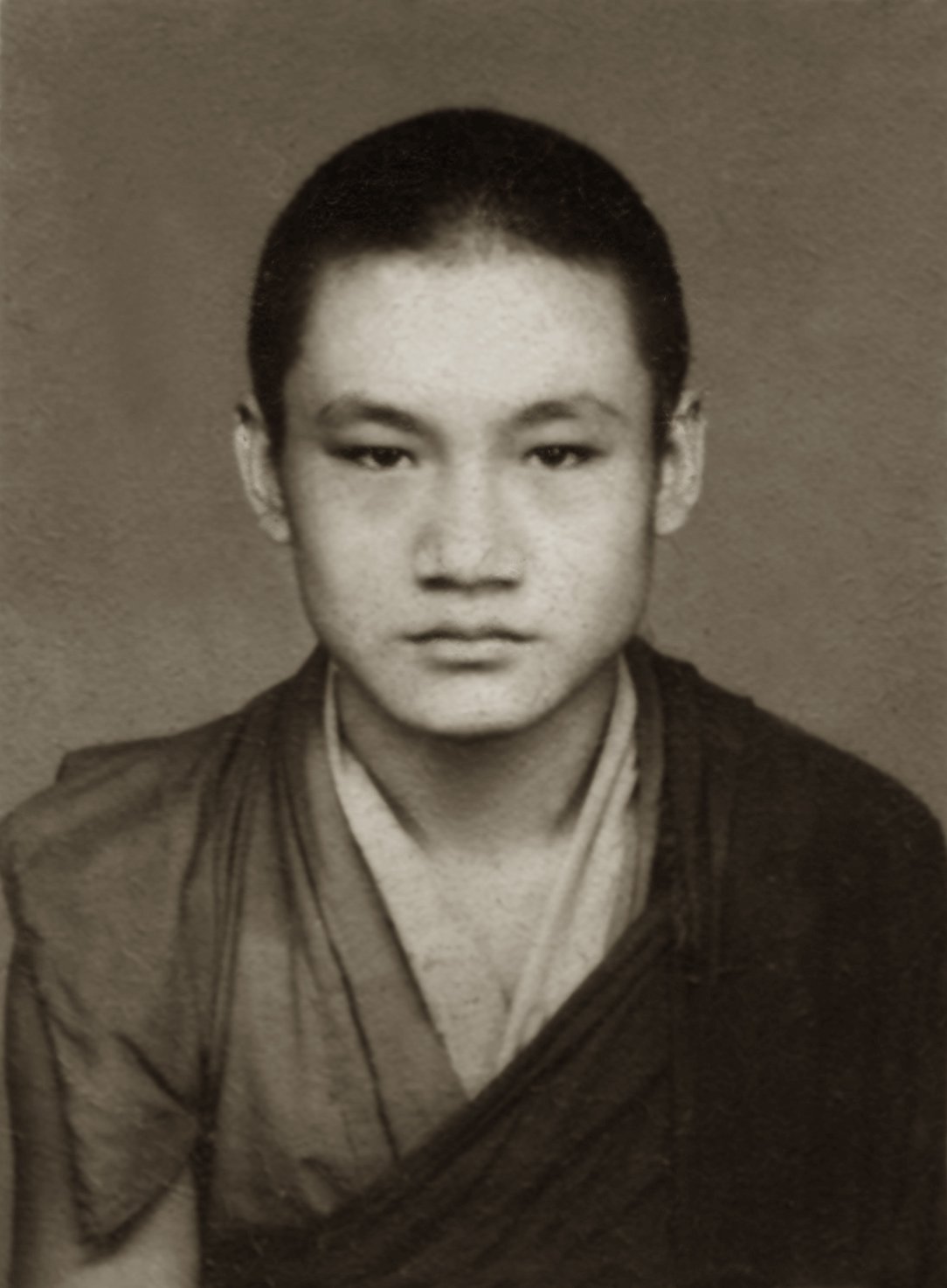
1976, age 20